
The evidence for getting it right is encouraging. A 2024 HBR study of one large firm found attendees received 24% more new collaborative-work requests after an offsite. That is one company's result, not a universal promise.
This guide covers activity ideas by goal, a sample day, selection criteria, a planning checklist, and venue considerations.
Key Takeaways
- Start with a business goal, then pick activities that serve it.
- Alternate focused work with connection, movement, and real breaks.
- Offer opt-outs so quieter teammates still take part.
- Check accessibility and safety before finalizing any activity.
- End with owners, deadlines, and a feedback loop.
What Is a Corporate Offsite?
A corporate offsite is a planned gathering held away from the usual workplace. Common purposes include strategic planning, collaboration, training, team connection, creativity, celebration, and wellness.
Terms overlap in practice. A meeting is usually short and tied to the office. An offsite may include formal work sessions. A retreat typically leans toward rest, culture, and relationship building. Published sources use these words loosely, so define yours for attendees.
Let the outcome drive the guest list:
- Executives: strategy, priorities, burnout prevention
- A full department: alignment and shared rituals
- A cross-functional project team: handoffs and decisions
- New hires: relationships and context
- A distributed workforce: in-person connection that video can't replace
Corporate Offsite Ideas by Goal
Strategic Planning and Decision-Making
Turn the offsite into protected time for alignment instead of a stack of slide decks. Good formats include:
- Annual-priority workshops that rank and cut goals
- Scenario planning, where groups rank forces by importance and uncertainty, as in Shell's classic approach
- Pre-mortems, where the team assumes a project failed and lists why. Gary Klein's HBR method surfaces doubts people otherwise keep quiet
- Customer journey mapping to test team assumptions
- Structured decision sessions built around specific questions
Define the decision or output for each activity before it earns a slot on the agenda. "Decide Q3 priorities" beats "Strategy discussion."
Team Connection and Communication
Aim for natural conversation without forced personal disclosure or cringe icebreakers.
- Facilitated storytelling about a past project
- Paired walks with a conversation prompt
- Cross-functional question cards
- Recognition circles
- Collaborative cooking
- Low-pressure team challenges
These matter because teams that feel safe taking interpersonal risks learn more. Edmondson's study of 51 manufacturing teams linked psychological safety to learning behavior, though it couldn't prove causation.

Creative and Innovation-Focused
- Design-thinking workshops (Empathize, Define, Ideate, Prototype, Test)
- Rapid prototyping
- Visual brainstorming on walls
- Photography or nature journaling
- Collaborative art projects
- "Build on the idea" rounds
These help divergent thinking, expose different problem-solving styles, and give the team a shared experience outside daily tasks. Be realistic about evidence: a 2025 study of arts-based team building showed mixed results, so pair art with a clear working goal.
Wellness and Reset
- Guided breathwork
- Yoga and meditation
- Forest bathing and nature walks
- Quiet reflection and stretching
- Optional digital-detox windows
Keep them invitational. Nobody should feel graded on flexibility or calm. A 2023 meta-analysis of 12 trials found breathwork lowered self-reported stress modestly. Fast-paced techniques caused transient symptoms in a small subgroup, so offer gentle alternatives.
Outdoor, Adventure, and Service
- Guided hikes at an easy pace
- Nature scavenger hunts
- Conservation projects following Leave No Trace principles
- Outdoor photography challenges
- Accessible problem-solving games
Always plan alternatives for weather, mobility, and health. Participation shouldn't depend on athletic ability. The ADA National Network's event guide recommends naming an accessibility coordinator early.
How to Structure a Team Offsite
Start with Purpose, Audience, and Outcome
Name a primary objective, a few supporting ones, and the decisions or deliverables that should exist at the end. Then tell attendees ahead of time:
- The purpose and agenda format
- Preparation required
- Dress expectations
- Which sessions are optional
Balance Focus, Connection, and Recovery
Alternate strategy sessions with interactive exercises, meals, outdoor time, and genuine breaks. Reserve optional personal time for quiet, private calls, rest, or prayer. Not everyone recharges in a group.
Build a Realistic Agenda
Here is a sample one-day flow:
- Arrival and orientation: settle in and set group norms
- Goal-setting: align on the primary objective
- Focused work block: tackle the core decisions
- Lunch and informal connection
- Creative or outdoor activity: reset energy and spark new ideas
- Reflection: capture what the group learned
- Action-planning close: lock owners and deadlines

HBR's offsite guidance suggests roughly 45 minutes to two hours per topic. Add buffer for transitions, weather, transportation, setup, and uneven energy levels.
Make Participation Active
Swap passive presentations for breakout discussions, polling, visual exercises, peer feedback, and assigned roles. Bring in a neutral facilitator when seniority, conflict, or cross-functional tension could skew who speaks.
Close with Commitments
End with decisions, owners, deadlines, and open questions. HBR recommends a concise summary with calendarized due dates. Then collect feedback on usefulness, inclusion, pacing, activities, and venue. Share what you will change next time.
How to Choose Activities Employees Will Actually Enjoy
Match Each Activity to an Objective
Tie every activity to a stated goal: trust, creativity, alignment, stress reduction, celebration, or cross-team communication. Cut the popular-but-irrelevant ones.
Design for Different Personalities
Mix formats so more people can opt in:
- Structured and unstructured time
- Small groups and full-group sessions
- Energetic activities and quiet options
Don't assume everyone enjoys:
- Competition
- Public speaking
- Physical challenges
- Alcohol-centered events
A March 2025 Acas survey in the UK found team-building topped least-favored work social activities at 31%. Treat that as directional context, not a U.S. offsite benchmark.
Check Accessibility, Safety, and Fit
Review these needs before finalizing:
- Mobility and sensory access
- Dietary, religious, and medical requirements
- Weather, transportation, and technology constraints
Title VII requires reasonable religious accommodation unless it creates undue hardship, so build in flexible breaks and menus. Ask each venue for specific safety and accessibility details instead of assuming.
Don't Overload the Schedule
A few purposeful experiences beat a packed itinerary. Prioritize:
- A distinctive setting
- Shared meals
- Thoughtful facilitation
- Real reflection time
Leave unscheduled blocks for organic conversation.
Corporate Offsite Planning Checklist
Before
- Define goals and confirm attendees
- Set a budget and choose the venue
- Assign an organizer or facilitator
- Collect accessibility and dietary needs
- Communicate expectations
- Prepare contingency plans
During
- Facilitator tracks time, participation, breaks, and transitions
- Confirm technology, meals, and safety
- Adjust the agenda without letting logistics overshadow attendees
After
- Send a written recap of decisions and action items
- Assign owners and deadlines
- Collect feedback
- Schedule a follow-up to check whether outcomes happened
Why Choose an Art-and-Nature Retreat for a Corporate Offsite?
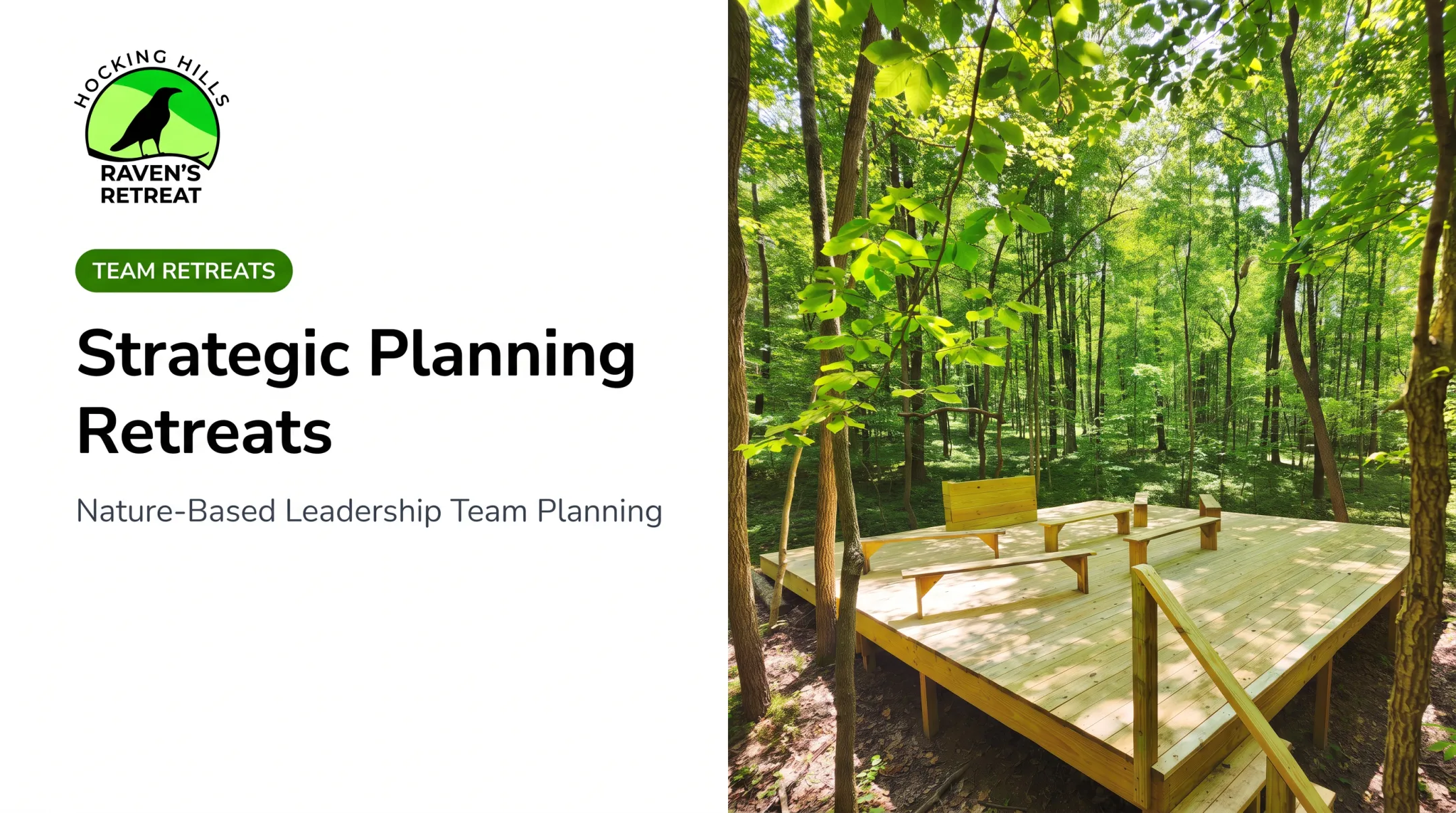
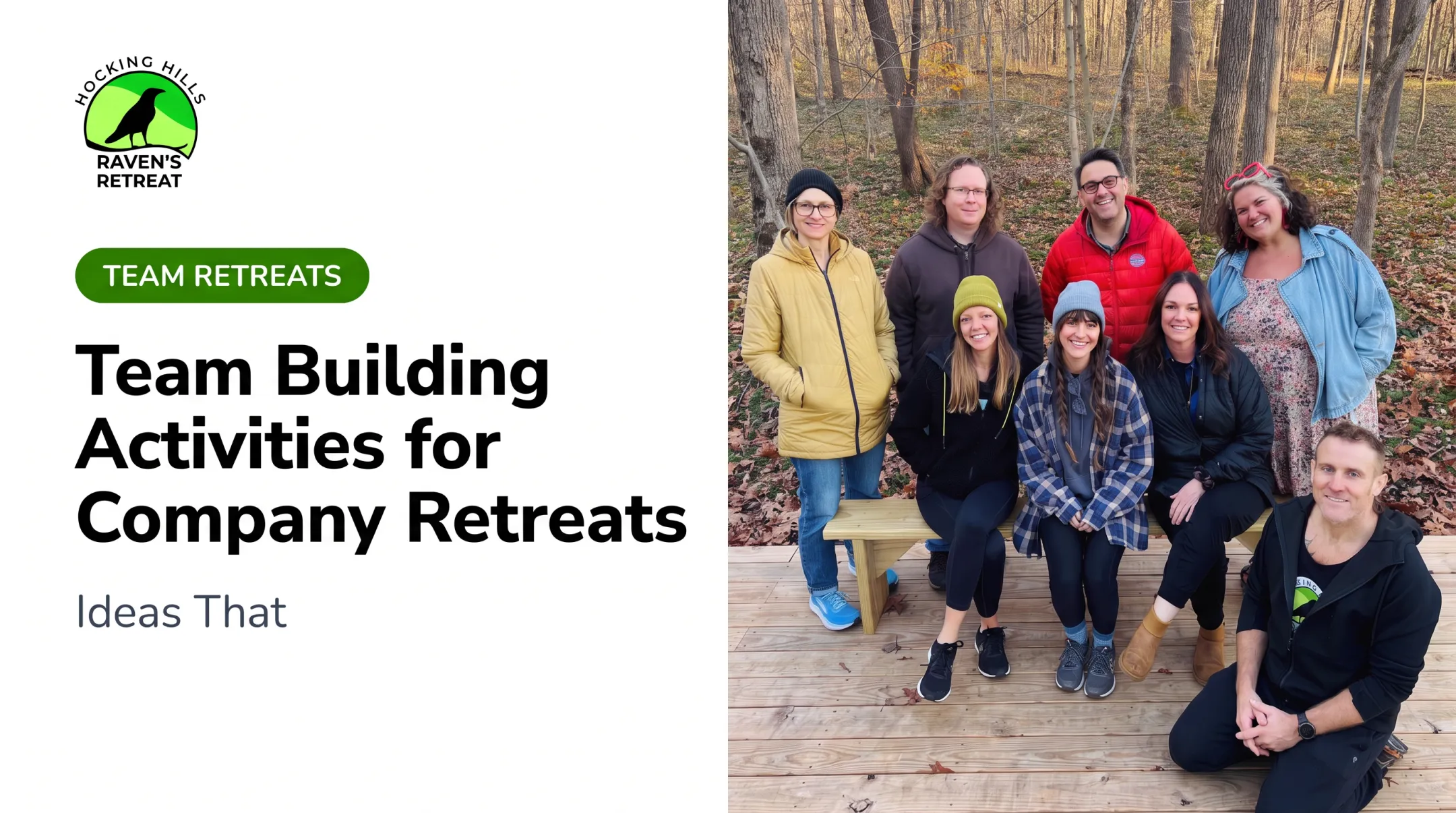
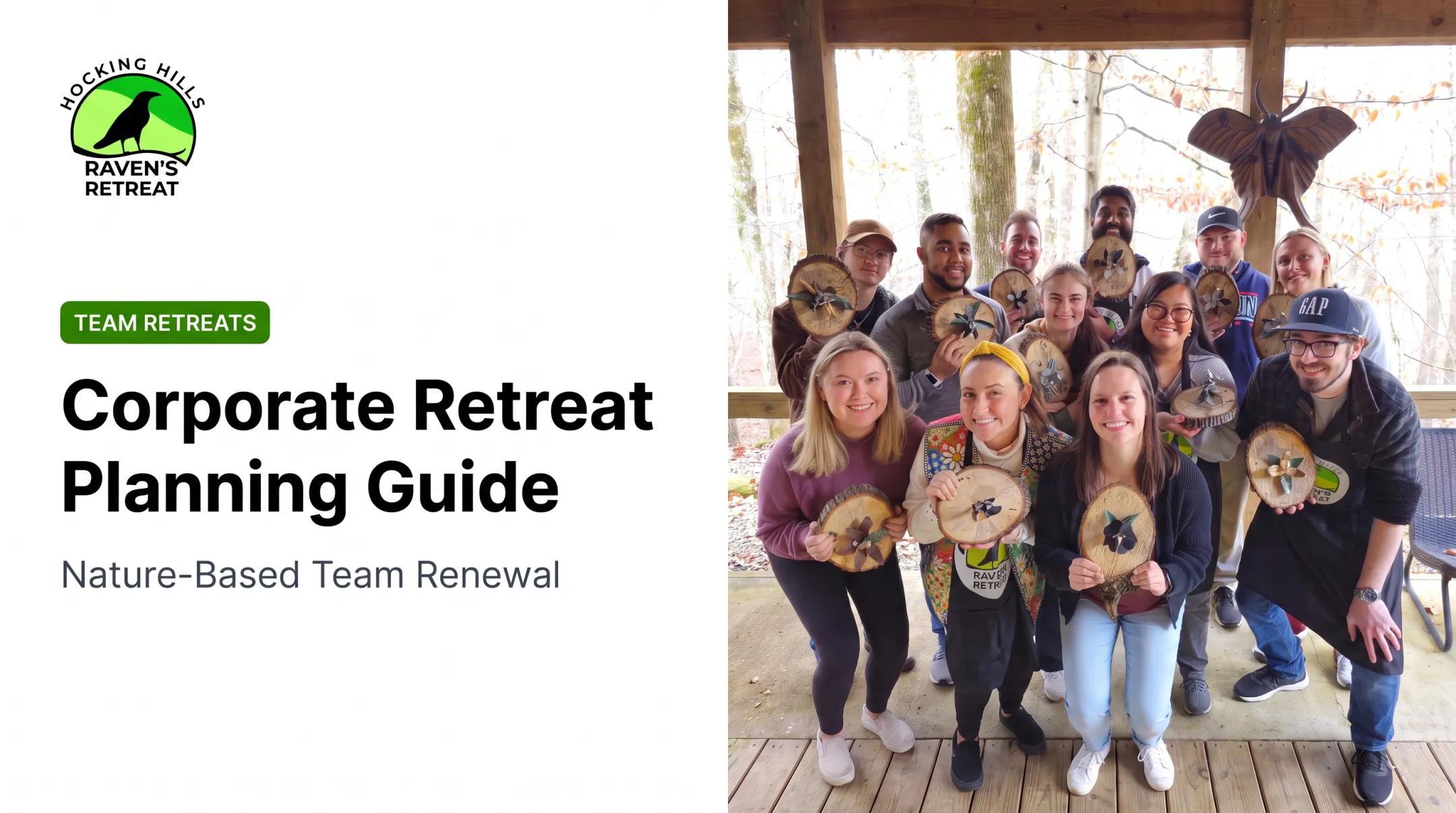
Art-and-nature retreats give teams room to think, reconnect, and plan away from office noise. Corporate retreats in Hocking Hills work well for small teams that want the agenda and the reset in one place. Raven's Retreat Hocking Hills is one option: an adults-only art and wellness retreat center on a 58-acre private nature preserve in Hocking Hills, Ohio, about an hour from Columbus, with immersive art installations.

The property can cover a full offsite agenda:
- Indoor meeting space with high-speed internet
- Outdoor gathering areas with indoor backup for weather
- Customizable wellness add-ons such as yoga, breathwork, and forest bathing
- Live sculpture performances by master sculptor Dustin Weatherby
- The collaborative art and conservation ideas above are real options here: a sculpture workshop with Dustin in the SculptDecor studio, or a stewardship project on the preserve
- Overnight stays for up to 18 (Art Lodge sleeps 16, Art Bungalow sleeps 2), day retreats for up to 20, plus full-property buyouts
Before booking any venue, confirm group fit, indoor and outdoor spaces, lodging layout, meals, wellness providers, weather plans, technology, and accessibility.
At Raven's Retreat, the terrain includes stairs, hills, and uneven ground, and the property isn't designed as fully accessible. Raise mobility questions early.
Planning a team offsite? Talk With Raven about your dates, group size, and goals. It starts with a free 15-minute consult.
Frequently Asked Questions
What is an offsite meeting?
A work gathering held away from the usual workplace. It often combines planning, collaboration, training, team building, or reflection.
How to structure a team offsite?
Define outcomes, brief attendees, balance work with activities and breaks, facilitate active participation, and end with clear action items and owners.
What are some creative ideas for company offsites?
Collaborative art, design-thinking workshops, nature photography, guided walks, wellness sessions, cooking experiences, and purpose-driven outdoor challenges.
How long should a corporate offsite last?
It depends on travel time, objectives, attendee needs, and agenda scope. No representative benchmark exists, and adding days just to fit in more activities usually backfires.
How do you choose activities for a company offsite?
Match each activity to the goal, then filter by team preferences, accessibility, energy levels, budget, venue, and available time.