
This guide is for leaders, HR teams, and planners organizing small-group retreats. The usual stumbling blocks are unclear objectives, overscheduling, budget surprises, missed dietary or accessibility needs, and no follow-through. Even HBR's 2006 analysis warns that many offsites are too loosely structured to change how a business runs.
We'll cover purpose, budget and timeline, venue choice, agenda design, logistics, and measuring results.
Key Takeaways
- Set one to three measurable objectives before choosing a date or venue.
- Match the setting and format to the goal.
- Protect unstructured time, plan inclusively, and have a weather and tech backup.
- Document commitments, collect feedback, and follow up.
Define What the Corporate Retreat Needs to Accomplish
A corporate retreat is an intentional off-site gathering built around a business goal. HBR describes the executive version as leaders stepping away for strategic debate and returning with clear goals and renewed teamwork.
Unlike a conference, it's small and participatory. It also changes the setting on purpose, which a regular meeting rarely does. And unlike an incentive trip, which SITE frames as a reward and motivator, it's built to produce work or connection.
Pick a primary purpose
Common purposes and what they demand:
- Strategic planning or leadership alignment: more working sessions, privacy, quiet rooms
- Team bonding or remote-team connection: shared meals, facilitated activities, informal time
- Onboarding or professional development: structured learning blocks with practice
- Appreciation or wellness: recreation, restoration, and plenty of downtime
Choose one primary objective and one or two supporting ones. Trying to do everything produces a retreat that does nothing well.
Turn goals into outcomes
"Improve collaboration" is too vague to plan around. Try "agree on three Q3 priorities," "pair each cross-functional team on one shared project," or "practice a new feedback format." HBR's offsite guidance suggests allotting roughly 45 minutes to two hours per topic and letting the goals shape the invite list.
Gather input first
Poll leadership and attendees before you lock the agenda:
- Desired outcomes
- Dietary needs and accessibility requirements
- Schedule constraints
- Activity preferences
- Concerns about travel or overnight stays
Early input builds buy-in. Filter it against your objectives, though, so the retreat doesn't become a pile of unrelated requests.
Set the Budget and Planning Timeline
Build the full budget
Account for every line, not just the venue:
- Venue fees, lodging, and meals
- Transportation and activities
- Facilitators, equipment, and supplies
- Service charges, taxes, and cleaning fees
- Contingency funds
For contingency, MPI's planning guide suggests allowing about 10% to 15% for unexpected costs. Food, beverage, and production costs tend to drive meeting-cost inflation, so confirm those numbers early. Published per-attendee averages are global and loosely scoped, so request itemized quotes instead of relying on benchmarks.
At Raven's Retreat in Hocking Hills, corporate retreats are custom quoted around group size, dates, and programming, which is why it pays to ask what's included before comparing venues.
Work backward from the retreat date
- 6+ months out: pick dates and venue, get budget approval
- 4-5 months out: book facilitators and vendors, collect attendee needs
- 2-3 months out: confirm menus, draft the agenda
- 1 month out: finalize agenda, run technology checks
- 1 week out: send final reminders and confirm headcount

Popular venues often fill up well ahead, especially for spring, fall, and peak weekends. Larger groups, full-property buyouts, and multi-location travel need extra lead time.
Pre-retreat checklist
- Contract signed; cancellation terms and payment deadlines noted
- Headcount and room assignments confirmed
- Transportation arranged
- Emergency contacts collected
- Day-of planner designated
Choose a Venue That Supports the Retreat Goals
Evaluate the basics
IACC's venue guidance points to capacity, breakout space, included services, accessibility, parking, and transport. Add these to your checklist:
- Location and travel time from where attendees start
- Privacy, lodging, and meeting areas
- Indoor and outdoor flexibility
- Restrooms, food service, and parking
- Connectivity and on-site support
Then verify the practical details:
- Wi-Fi performance and cellular coverage
- Power access and presentation or whiteboard setup
- Sleeping arrangements and accessibility
- Dietary accommodation and a realistic bad-weather alternative
Ask for an itemized quote that separates venue fees from outside vendors and extra charges.
Match features to the retreat type
- Strategy sessions: quiet workspaces and dependable technology
- Team connection: common areas and shared meals
- Restoration: wellness amenities and nature access
- Leadership retreats: privacy and full-property buyout options
Why a nature setting works
A systematic review of 31 studies found some support for the idea that natural environments restore attention, though the evidence varies and wasn't specific to corporate retreats. A private nature setting can reduce distraction and encourage informal conversation. It still needs a deliberate plan for connectivity and work obligations.
Example: Raven's Retreat Hocking Hills
Raven's Retreat is a 58-acre private nature preserve near Laurelville, Ohio, about an hour from Columbus. It suits small teams who want an art-and-nature concept, and sits alongside the wider corporate retreats programme:
- The Sculptor's Art Lodge sleeps 16 and the Sculptor's Art Bungalow sleeps 2, up to 18 with a full buyout. Day retreats host up to 20
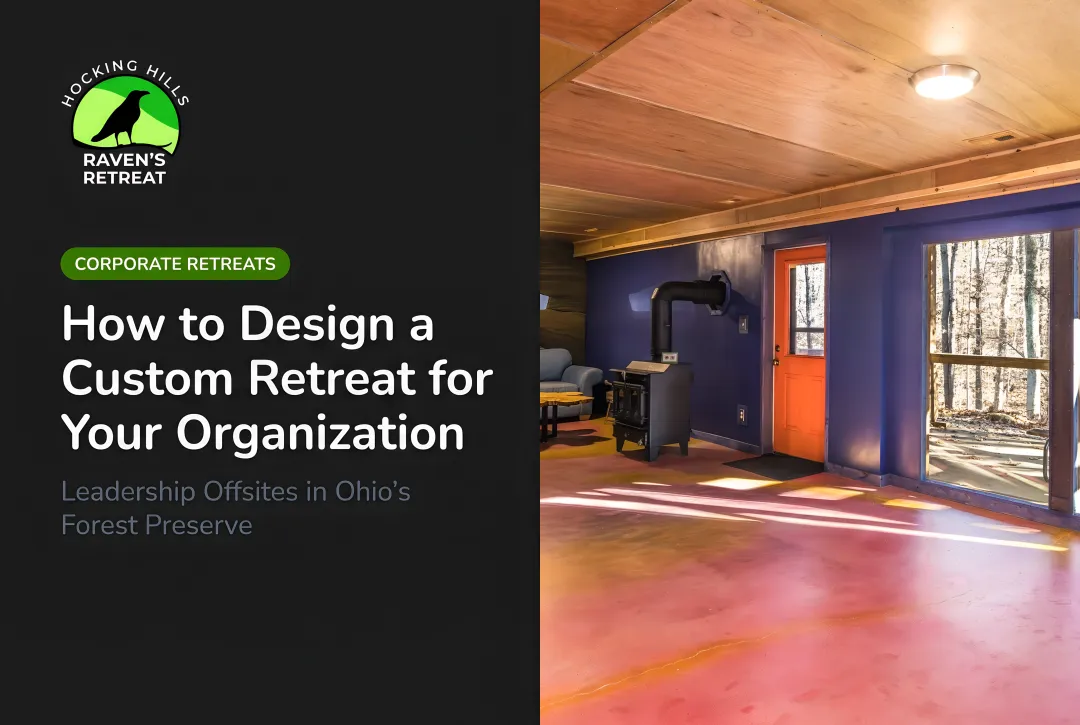
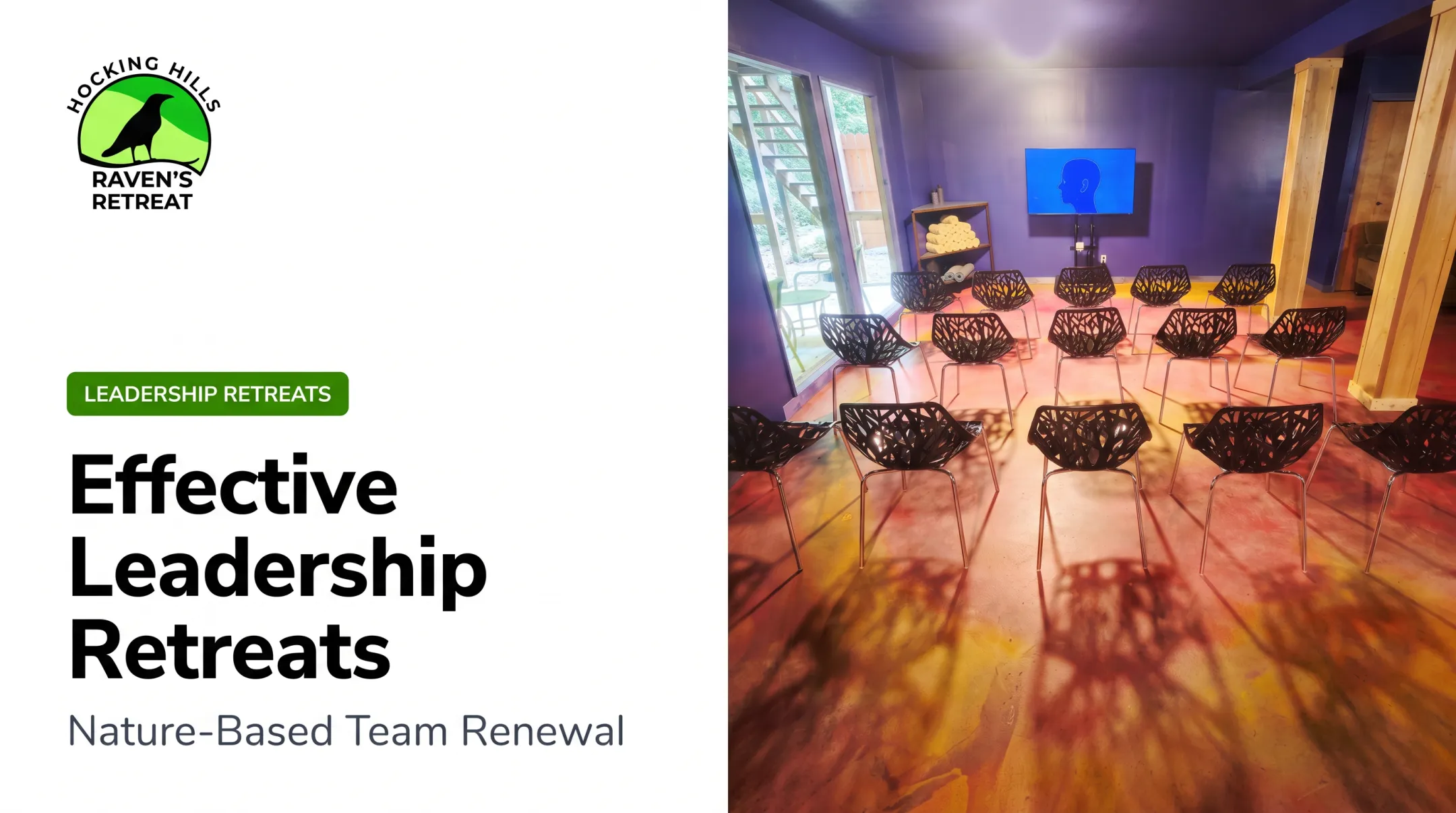
- The lodge's open floor space works as a meeting room, with a large presentation screen and high-speed internet
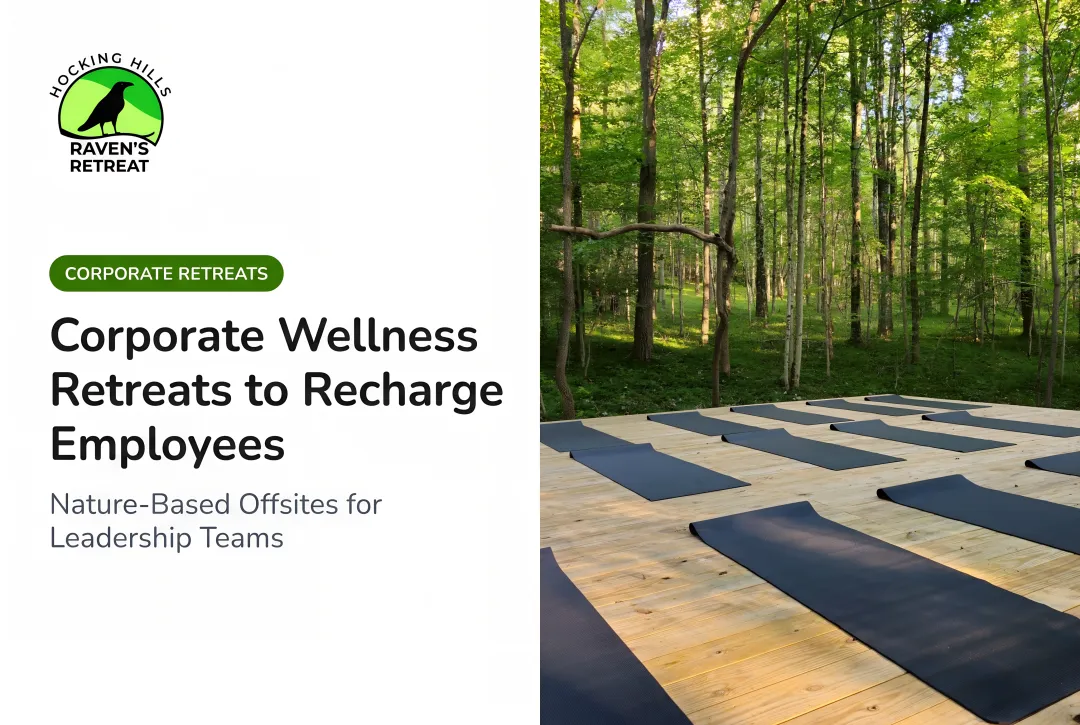
- Indoor and outdoor gathering areas, including an elevated forest platform for movement and meditation
- Live sculpture experiences and wellness add-ons such as yoga, forest bathing, and private chef meals
It's adults-only and isn't a conference center. The property has steps, hills, and uneven terrain, so it isn't fully accessible. Confirm availability, group fit, buyout options, and any accessibility needs directly with the hosts.
Build a Balanced Agenda and Choose Purpose-Driven Activities
Schedule focused work, meals, connection, recreation, and real unstructured time. HBR research notes that meeting overload is stressful and hurts focused work. Don't fill every minute.
A practical multi-day flow
- Arrival day: informal welcome, orientation, settling in, low-pressure shared dinner
- Main day: priority work session, breaks, small-group discussion, an aligned activity, downtime, optional evening gathering
- Departure day: recap, decisions, assigned commitments, feedback, clear departure window
For activity ideas, see our guide to corporate offsite ideas. If the goal is leadership alignment, compare executive retreat venues, a strategic planning retreat, or a leadership retreat.
Match activities to the objective
- Alignment: facilitated strategy exercises, cross-functional breakouts, walk-and-talk discussions
- Connection: collaborative cooking, storytelling, shared meals, creative challenges, guided nature experiences
- Wellness: yoga, meditation, breathwork, restorative walks, open personal time
- Creativity: workshops, live demonstrations, collaborative art projects
Walking has some support too. A Stanford study of 176 adults found creative output averaged 60% higher while walking than sitting, though it didn't test retreats.

Make participation inclusive
- Offer active and low-mobility options
- Make optional activities genuinely optional, and avoid forced vulnerability
- Share expectations in advance
- Provide quiet spaces and permission to step out, which helps introverts and neurodivergent attendees
- Offer nonalcoholic options as equal choices
Assign owners and outcomes
For each essential session, name the facilitator, prep required, materials, expected decision or deliverable, and how next steps get recorded. Then test the whole agenda against your objective. Any activity that doesn't serve it is entertainment, so cut it or shrink it.
Manage Logistics, Inclusion, and Post-Retreat Follow-Up
Communicate before arrival
Send a clear packet with:
- Schedule, marking required versus optional sessions
- Directions, parking, and transportation
- Lodging, packing list, and meal arrangements
- Technology expectations and emergency contacts
- Weather updates as needed
Offer a confidential way to share dietary, accessibility, medical, or other needs.
Manage risk
- Review cancellation and force majeure terms; Cornell's legal reference notes these clauses may excuse performance during extraordinary events, depending on wording
- Check insurance and liability requirements (cancellation and liquor liability vary by policy)
- Set alcohol guidelines and plan safe transportation after evening events
- Review activity safety and emergency procedures
Support hybrid participants
Treat remote teammates as equal contributors. Share materials in advance, account for time zones, and give them a real way to contribute, not just a dial-in link.
Measure results
Close the loop while details are fresh:
- Send a short survey on objectives, session value, inclusion, logistics, and improvements
- Document decisions with owners and deadlines
- Schedule a follow-up review a few weeks out
- Capture photos, quotes, or reflections during the retreat for the recap
To evaluate impact, use established frameworks such as Kirkpatrick's four levels (reaction, learning, behavior, results) or the Phillips ROI methodology. Avoid quoting unsupported productivity percentages. One 2024 HBR offsite study measured changes in collaboration networks, not general productivity gains.

Frequently Asked Questions
What happens on a corporate retreat?
Most combine focused work or planning sessions with meals, team connection, activities, wellness, and unstructured time. The mix depends on the retreat's goals.
What is a corporate retreat?
It's an intentional off-site gathering designed to support objectives such as strategy, leadership development, collaboration, culture, or employee well-being.
What are some ideas for a company retreat?
Match ideas to goals: strategic workshops, creative collaboration, guided nature activities, wellness sessions, shared meals, facilitated team-building, and leadership discussions.
What are some good corporate retreats in the US?
Evaluate venues by location, group size, privacy, lodging, meeting infrastructure, accessibility, activities, weather backup, and customization. The best choice depends on your team's goals and travel needs.
What are the basic rules for a corporate retreat?
Set clear business objectives, encourage respectful and inclusive participation, and state expectations openly. Add responsible alcohol and safety policies, accommodate dietary and accessibility needs, and document follow-up.
Planning a corporate retreat? Talk With Raven. It starts with a free 15-minute consult.