
A strategic planning retreat fixes that by giving leaders dedicated time and distance to assess where they stand, make hard choices, and align on next steps. It works only when the retreat is designed around decisions, not content delivery. HBR's executive retreat guidance frames the intended return as clear goals.
This guide covers preparation, agenda design, facilitation, follow-through, and choosing a setting.
Key Takeaways
- Build the retreat around decisions and deliverables, not presentations.
- Pre-work, a decision-focused agenda, and skilled facilitation do most of the heavy lifting.
- Document owners, milestones, and review dates before anyone leaves.
- A thoughtful off-site setting supports focus and reflection, but it complements the planning work rather than replacing it.
What Is a Strategic Planning Retreat?
A strategic planning retreat is a focused gathering where leaders step away from daily operations to evaluate performance, consider future conditions, select priorities, and agree on action.
It differs from other gatherings by its output:
- Routine meeting: manages current operations
- Team-building retreat: strengthens relationships
- Leadership retreat: often develops skills or culture
- Strategic planning retreat: produces direction and accountable commitments
Social time still has a place. It just isn't the point.
The Five Key Components of a Strategic Plan
No single authoritative five-part framework exists, but federal planning guidance and the Balanced Scorecard Institute's models converge on these:
- Current-state assessment: performance, finances, capabilities, stakeholder feedback, and market conditions
- Direction: mission, vision, purpose, and desired future position
- Strategic priorities: a manageable number of high-impact goals, plus what you will not pursue
- Execution plan: owners, resources, milestones, and near-term actions
- Measurement and review: success indicators, reporting rhythms, and criteria for adjusting the plan
With those components set, a clear theme keeps the group locked on outcomes instead of drifting into open-ended discussion.
A Good Theme for a Strategic Planning Retreat
Pick a theme that names the outcome you want: "From Vision to Action," "Focused for the Future," or "Clarity, Commitment, and Execution." Tailor it to your current challenge. A team drowning in initiatives might choose "Fewer, Better."
Don't treat it as a slogan. No study shows a theme alone improves results, so make it earn its place:
- Echo it in the pre-work questions
- Use it in the opening message
- Shape agenda sessions around it
- Revisit it in closing commitments
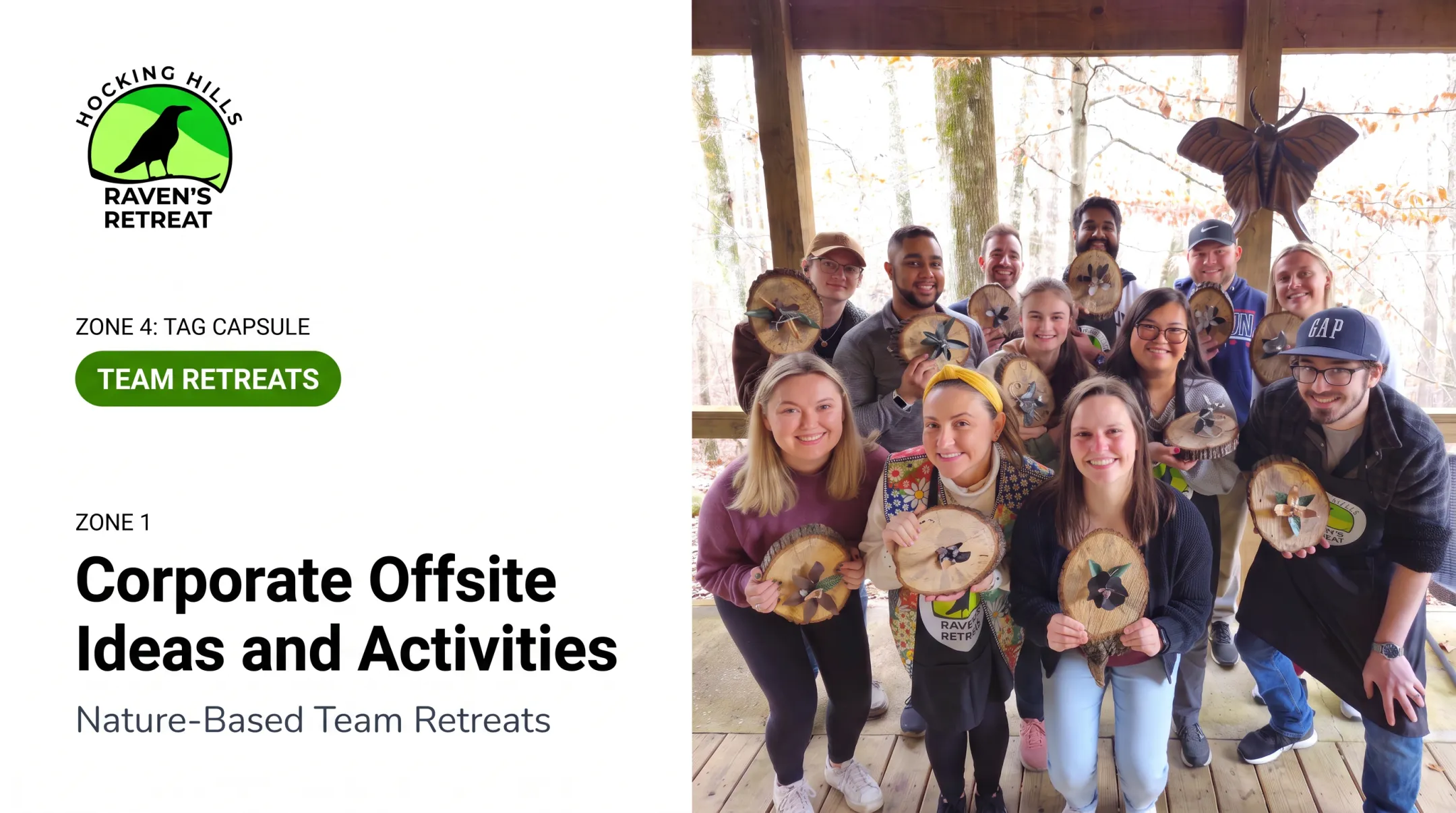
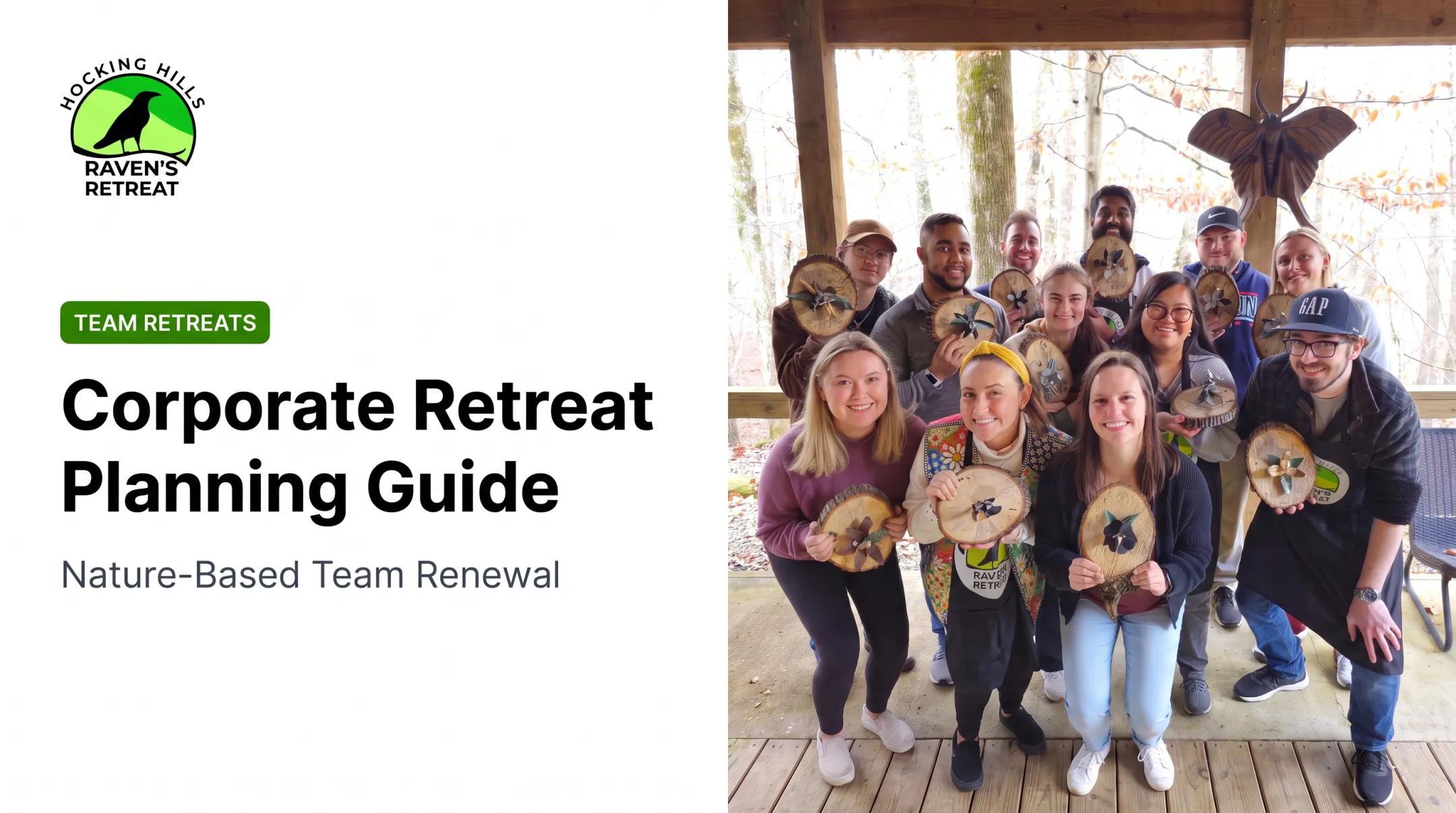
One example: a documented team day at Raven's Retreat used the theme "Purging to Optimize," asking which habits and thought patterns no longer fit the next five years. It opened with a circle, and every experience that followed was shaped by the theme's questions.
How to Prepare for a Strategic Planning Retreat
Most retreat success is decided before arrival. Five steps matter.
Define Outcomes Before Booking
Write down the decisions the group must make, the questions it must answer, and what participants leave with. Keep outcomes observable:
- A short list of priorities
- A refined strategic direction
- Assigned owners
- An agreed review schedule
The UNC School of Government's retreat checklist likewise starts with objectives and the information needed to meet them.
Build a Shared Information Base
Circulate a concise briefing packet covering:
- Progress against the current plan
- Financial and operational trends
- Customer or stakeholder feedback
- Competitive or market changes
- Unresolved risks
Use a SWOT exercise to separate verified facts from assumptions. Treat it as an input to planning, not the strategy itself.
Choose Participants and Clarify Roles
Invite people who shape direction, bring relevant expertise, represent key functions, or will own implementation. Skip anyone with no real role in the decisions.
Tell them in advance whether they're creating strategy, refining one, or turning an approved strategy into an execution plan. Clarify who decides, too. Bain's RAPID model, for example, names one recommender and one final decision-maker.
Gather Input Early
Use a short confidential survey or interviews. Ask what's working, what isn't, which opportunities deserve attention, and what to stop doing.
Have participants review the briefing materials and submit focused responses before arrival. Retreat time then goes to interpretation and decisions, not basic information sharing.
Set Logistics and Norms
Lock in the practical details first:
- Length and facilitator
- Decision process and technology needs
- Accessibility, meals, and breaks
- Device expectations
Then set norms the group will hold: candor, respectful disagreement, balanced participation, evidence over opinion, and commitment to decisions once made.

How to Build a Strategic Planning Retreat Agenda
Keep the sequence constant: context, future direction, priorities, commitments.
Start With Context and the Current State
Open by confirming purpose, desired outcomes, decision rules, and working agreements. Then review performance and key pre-work findings. Push the group to name the few issues needing strategic attention rather than revisiting every operational detail.
Move From Analysis to Future Thinking
Ask direct questions:
- What has changed?
- What will matter most in the next planning period?
- What would success look like if we hit our goals?
Add a structured exercise that tests your mission, vision, capabilities, customer needs, and market assumptions against the future you want.
Prioritize Choices, Not Ideas
Move from brainstorming to evaluation using agreed criteria: strategic fit, impact, urgency, feasibility, resources, and alignment with values. An impact-feasibility matrix, like the one Washington State publishes, helps sort actions into now versus later.
Then require the team to name what it will defer, discontinue, or decline. A plan without that list is a wish list.
Convert Priorities Into an Execution Framework
For each priority, capture:
- Intended outcome
- First milestone
- Accountable owner
- Supporting resources and dependencies
- A preliminary progress measure
Decide which choices belong in the room. Tactical details can be developed afterward by the people doing the work.

Protect Time for Reflection
Build in real breaks, meals, movement, and unstructured thinking time. Tired groups make worse decisions. A 2022 meta-analysis of microbreak studies found small gains in vigor and reduced fatigue, though no significant overall performance effect, so treat breaks as support, not magic.
Optional wellness or nature-based activities can help people reset, but they stay secondary to the strategic purpose.
Adapt the Agenda to One or Two Days
There is no standard length. BDC advises that duration should reflect the scope and seriousness of the issues.
| Format | Flow |
|---|---|
| One day | Combine current-state review and future discussion in the morning; reserve the afternoon for priorities, owners, and next steps |
| Two days | Day one: research, mission, vision, strategic possibilities. Day two: prioritization, execution planning, commitment |
How to Facilitate the Retreat and Turn Decisions Into Action
Internal or External Facilitator?
An outside facilitator protects neutrality, draws out quieter people, manages power dynamics, and frees the CEO to participate fully. An internal facilitator can work for a smaller or less sensitive retreat if they stay impartial, manage time, and document decisions. Match the choice to retreat size, topic sensitivity, and whether leadership needs to stay fully in the discussion.
Techniques for Honest Discussion
- Start with silent brainstorming
- Use small cross-functional groups
- Keep a visible decision record
- Run a parking lot for off-topic issues
- Invite senior leaders to speak last
Have the facilitator separate facts, interpretations, preferences, and open questions. Otherwise assumptions get treated as strategy. Psychological safety matters here: Edmondson's field study of 51 teams linked it to team learning behavior such as sharing information and discussing errors.
From Divergent Thinking to Disciplined Prioritization
Organize ideas with SWOT findings, scenario questions, or impact-effort comparisons before choosing. Keep the final list sized to your people, budget, time, and capabilities. Write down the rationale for major trade-offs so you don't relitigate them in March.
Capture Decisions in a Usable Format
End each major session by recording the decision, owner, deadline, resources, success measure, and dependencies. Use a shared digital document or project tracker, not just a printed summary that gets filed.
Build the Follow-Up Rhythm Before Leaving
- Schedule early check-ins and longer strategy reviews
- Decide how progress is reported and risks escalated
- Define when priorities get revised
- Send a concise summary to participants and affected employees: what was decided, what's open, and how people can contribute
Google's mid-quarter check-in and quarter-end OKR review is one useful model. Adapt the cadence to your team's size and planning cycle.
Measure Whether the Retreat Worked
Track:
- Percentage of agreed actions completed
- Progress against milestones
- Decision-making speed
- Quality of participation
- Whether priorities stay visible in regular leadership meetings
Execution is where most strategy stalls. PMI's report found respondents rated an average of 56% of strategic initiatives as successful (a self-reported figure, not a verified rate), which underscores why follow-through matters as much as the retreat itself.

How to Choose the Right Setting for a Strategic Planning Retreat
Evaluate the Venue as Part of Planning
Look for:
- Privacy and separation from workplace interruptions
- Comfortable meeting and breakout areas
- Reliable technology
- Overnight accommodations and meals or nearby dining
- Accessibility and manageable travel
The space should support focused sessions and informal conversation, so people aren't stuck at a conference table all day. Confirm the venue meets current ADA requirements rather than assuming accessibility is covered.
The Value of a Nature-Based Setting
Outdoor space, walking routes, natural light, and quiet corners vary the pace of a demanding retreat. The research is suggestive, not conclusive.
A 2014 experiment found 81% of 48 participants produced more creative output while walking, though walking hurt performance on convergent tasks. Studies of nature exposure and rumination used small samples and didn't measure leadership outcomes.
So treat nature as a support for reflection, not a guarantee of better strategy.
Connectivity matters too. Make sure essential work can happen online, then set clear device-free periods for discussion and reflection.
Raven's Retreat Hocking Hills as a Corporate Retreat Setting
Raven's Retreat Hocking Hills is an adults-only art and wellness retreat center on a 58-acre private nature preserve in Hocking Hills, Ohio, built for teams that want strategic work alongside art, nature, and wellness. Highlights:
- A private 58-acre nature preserve with over a mile of trails
- Immersive art installations throughout the property
- Sculptor's Art Lodge (up to 16 guests) and Sculptor's Art Bungalow (2 guests), up to 18 overnight with a full buyout, or day retreats for up to 20
- High-speed internet for hybrid sessions
- Indoor and outdoor gathering options
- Full-property buyout and customizable creative or wellness experiences
It sits about an hour from Columbus and roughly two hours from Cincinnati and Cleveland. It is not a traditional conference center, so confirm group capacity, meeting layouts, lodging details, accessibility, catering, and technology needs before booking.
Conclusion: Give Your Strategy Room to Take Shape
A strategic planning retreat works when the sequence is right:
- Define the decisions up front
- Prepare shared information before arrival
- Bring the right people together
- Structure the agenda around priorities
- Document commitments in the room
- Set follow-up before anyone leaves
Related reading: our corporate retreat planning guide, how to run a leadership retreat, and how to compare executive retreat venues.
Planning a strategic planning retreat? Talk With Raven about your dates, group size, and goals. It starts with a free 15-minute consult. Raven's Retreat hosts corporate retreats year round.
Frequently Asked Questions
What is a strategic retreat?
It is an off-site gathering where leaders assess the organization, set strategic priorities, and commit to actions. Unlike a team-building event, its main output is direction and accountability.
What are the 5 key components of a strategic plan?
Current-state assessment, direction (mission and vision), strategic priorities, an execution plan, and measurement with regular review.
What is a good theme for a leadership retreat?
Choose a decision-oriented theme such as "From Vision to Action." It should reflect your team's goals and appear in the pre-work, opening, agenda, and closing commitments.
How long should a strategic planning retreat be?
It depends on the number and complexity of decisions. One-day and two-day formats both work when pre-work and follow-up are planned carefully.
How do you make sure a strategic planning retreat leads to action?
Assign one owner to each priority, define milestones and measures, and document decisions in a shared system. Communicate the plan, then schedule recurring progress reviews.